
Table of Contents
- What is IPTV Latino
- How IPTV Latino Works
- Evolution of Latino IPTV Streaming
- Key Features of IPTV Latino Services
- IPTV Latino vs Traditional Cable TV
- Compatible Devices for IPTV Latino
- Real Examples of IPTV Latino Usage
- Benefits of IPTV Latino
- Performance and Streaming Optimization
- Industry Insights and Trusted Sources
What is IPTV Latino
refers to a digital streaming system that delivers Spanish-language television channels, movies, and on-demand content using internet protocol technology. Unlike traditional cable television, Latino allows users to access a wide range of Latino entertainment through internet-connected devices, offering flexibility and convenience. This includes live sports, news, cultural programming, and regional channels from Latin America, Spain, and the United States. The increasing demand for multilingual content has made iptv a powerful solution for audiences seeking personalized viewing experiences. It represents a major shift from fixed broadcasting schedules to dynamic, user-controlled streaming platforms.
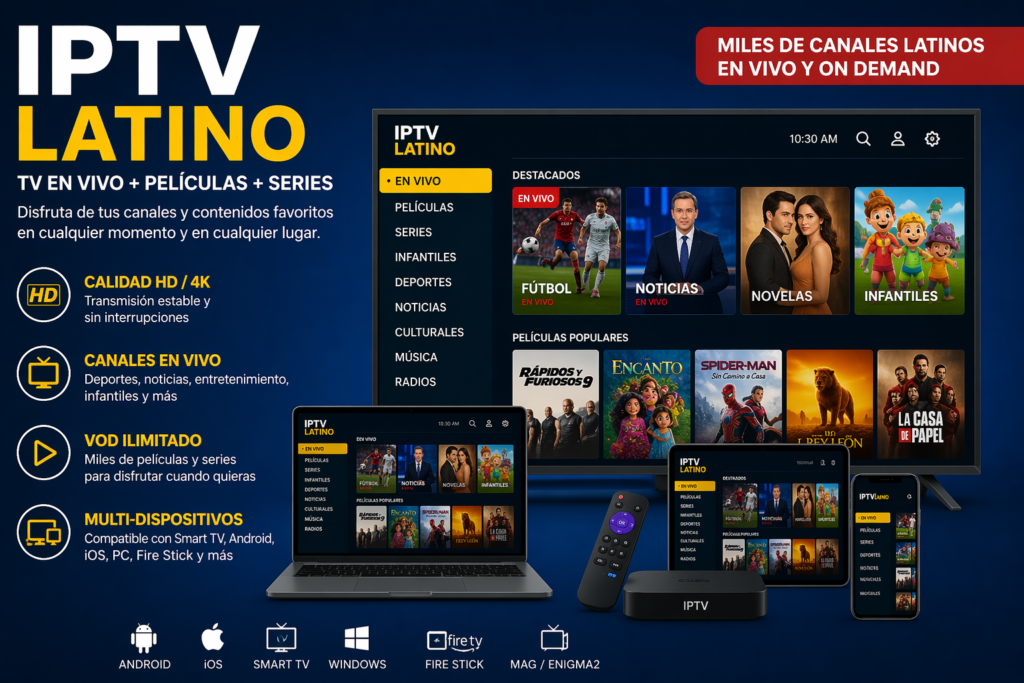
How IPTV Latino Works
operates by transmitting television content over internet networks instead of traditional satellite or cable systems. Users access IPTV through applications installed on smart TVs, smartphones, tablets, or streaming devices. These applications connect to remote servers that host live channels and video-on-demand libraries. An Electronic Program Guide (EPG) organizes content into schedules, making navigation simple and efficient. According to TechRadar, IPTV systems rely on advanced streaming protocols and cloud-based infrastructure to deliver high-quality video. This technology ensures real-time updates and smooth playback, making IPTVLatinoreliable for everyday use.
Evolution of Latino IPTV Streaming
The evolution of IPTV reflects broader changes in global media consumption. In the past, Latino audiences relied heavily on cable providers with limited channel options. Today, IPTV offers access to thousands of channels and on-demand content from multiple regions. Innovations such as artificial intelligence and recommendation algorithms have further enhanced the user experience. Insights from Digital Trends indicate that streaming platforms are prioritizing personalized content delivery. Meanwhile, CNET highlights the growing popularity of IPTV among Spanish-speaking communities worldwide.
Key Features of IPTV Latino Services
Latino platforms include a range of features designed to improve accessibility and user satisfaction. These features include high-definition streaming, real-time channel updates, multi-language subtitles, and customizable playlists. Users can also access catch-up TV and video-on-demand libraries, allowing them to watch content at their convenience. According to PCWorld, advanced IPTV features enhance user engagement by simplifying content discovery. These capabilities make IPTV Latino a versatile solution for both casual viewers and dedicated streaming enthusiasts.
IPTV Latino vs Traditional Cable TV
Latino provides several advantages over traditional cable television, particularly in terms of flexibility and content variety. Cable TV relies on fixed schedules and limited channel availability, whereas IPTV offers on-demand access and customizable viewing experiences. Users can switch between devices, explore international channels, and enjoy uninterrupted streaming. The comparison below highlights key differences:
| Feature | IPTV Latino | Cable TV |
|---|---|---|
| Content Access | On-demand + Live | Scheduled only |
| Device Compatibility | Multi-device | Limited |
| Flexibility | High | Low |
| Updates | Real-time | Static |
Research from Lifewire confirms that IPTV platforms provide greater convenience and adaptability compared to traditional broadcasting methods.
Compatible Devices for IPTV
IPTV Latino is designed to function across a wide range of devices, ensuring accessibility for diverse audiences. Supported devices include smart TVs, Android and iOS smartphones, tablets, laptops, and streaming devices such as Fire Stick and Android TV boxes. This compatibility allows users to access their favorite content anytime and anywhere. According to Android Authority, mobile streaming continues to grow rapidly, driven by demand for flexible entertainment options. Additionally, CNET emphasizes that cross-platform support is essential for modern streaming services.
Real Examples of IPTV Usage
IPTV Latino is widely used in various real-world scenarios, from households to businesses. For example, families use to watch regional news, sports events, and cultural programs from their home countries. Restaurants and cafes use IPTV systems to provide entertainment for customers, while educational institutions use them for language learning and cultural content. According to Cord Cutters News, IPTV adoption is growing rapidly due to its ability to deliver personalized content. These examples demonstrate how IPTV Latino enhances entertainment experiences across different environments.
Benefits of IPTV
The benefits of IPTV extend beyond basic streaming capabilities. Users enjoy access to diverse content, improved navigation, and enhanced viewing flexibility. The ability to watch programs on-demand reduces dependency on fixed schedules, making entertainment more convenient. IPTV also supports high-quality streaming, including HD and 4K formats. According to TechRadar, modern IPTV platforms are designed to optimize user engagement and satisfaction. These advantages make IPTV Latino a preferred choice for audiences seeking flexible and high-quality streaming solutions.
Performance and Streaming Optimization
The performance of IPTV Latino depends on factors such as internet speed, server reliability, and device capability. High-speed internet is essential for smooth streaming, particularly for high-definition content. Users should ensure stable connections and regularly update their applications to maintain optimal performance. According to Tom’s Guide, consistent bandwidth is crucial for uninterrupted viewing. Additionally, Digital Trends notes that server optimization plays a key role in delivering seamless streaming experiences.
Industry Insights and Trusted Sources
The IPTV industry is supported by insights from leading technology platforms that analyze streaming trends and performance. TechRadar provides in-depth reviews of IPTV technologies, while CNET focuses on digital entertainment trends. PCWorld offers technical analysis, and Lifewire provides practical guides for users. These sources highlight the growing importance of IPTV Latino in modern streaming ecosystems.
Conclusion
IPTV Latino has become one of the most important streaming solutions for Spanish-speaking audiences worldwide, offering flexibility, affordability, and access to a wide variety of entertainment content. Unlike traditional television systems, IPTV provides users with complete control over what they watch, when they watch it, and on which device. This shift toward internet-based television reflects a broader transformation in global media consumption, where personalization and convenience are now top priorities. As internet speeds improve and streaming technologies advance, IPTV Latino continues to grow as a dominant force in digital entertainment, reshaping how Latino content is delivered and consumed across households and mobile devices.
Frequently Asked Questions (FAQ)
1. What is IPTV used for?
IPTV Latino is used to stream Spanish-language television channels, movies, sports, and on-demand content through internet-connected devices. It replaces traditional cable by offering more flexibility and global access.
2. Do I need a special device for IPTV ?
No special device is required. IPTV Latino works on smart TVs, smartphones, tablets, computers, and streaming devices like Fire Stick or Android TV boxes.
3. Is IPTV Latino better than cable TV?
Yes, in most cases. IPTV offers on-demand content, multi-device access, and more channel variety compared to traditional cable TV, which is limited by fixed schedules.
4. What internet speed is needed for IPTV Latino?
For smooth streaming, at least 10 Mbps is recommended for HD content, while 25 Mbps or higher is ideal for 4K streaming without buffering.
5. Can IPTV Latino work on mobile phones?
Yes. IPTV Latino is fully compatible with Android and iOS devices, allowing users to watch live TV and on-demand content anywhere with an internet connection.
6. Why does IPTV Latino sometimes buffer?
Buffering usually happens due to slow internet speed, unstable Wi-Fi, overloaded servers, or outdated applications. Improving connection quality often solves the issue.
7. Is IPTV Latino legal?
The legality depends on the service provider and content licensing. Licensed IPTV services are legal, while unlicensed ones may violate broadcasting rights.
8. Can I use IPTV Latino on multiple devices?
Yes, many IPTV Latino services support multi-device usage, allowing users to switch between TV, phone, and tablet depending on convenience.