
Table of Contents
- Introduction to IPTV on Plex
- What is IPTV on Plex?
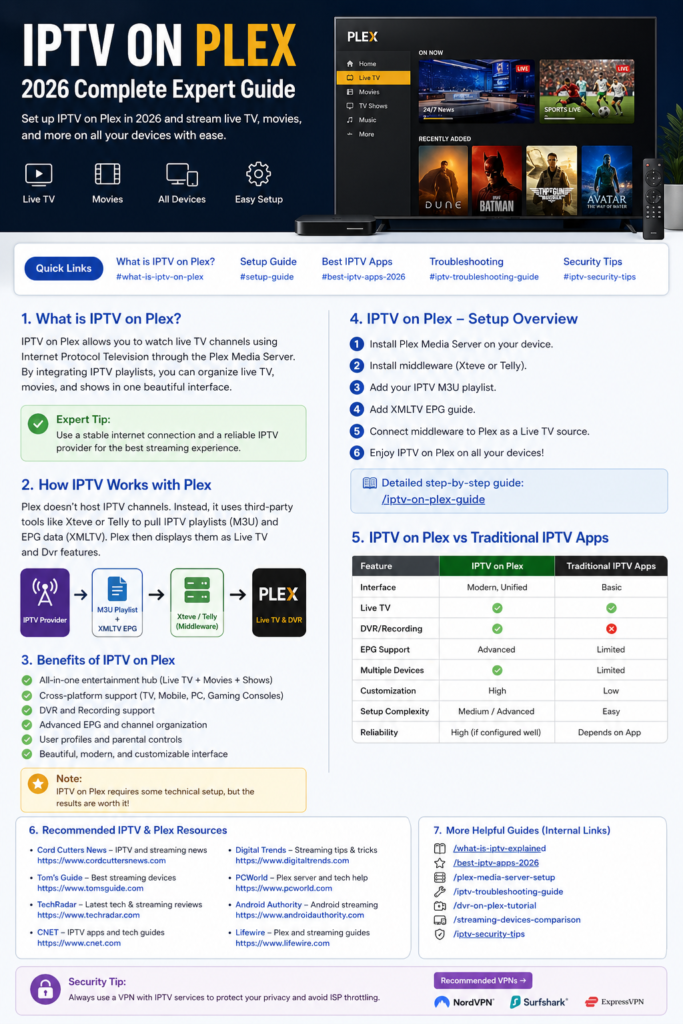
- How IPTV Works with Plex
- Benefits of Using IPTV on Plex
- System Requirements and Setup Needs
- Step-by-Step Setup Guide (Part 1)
- Key Features of IPTV on Plex
- Supported Devices and Platforms
- Performance Comparison Table
- Optimization Tips for Smooth Streaming
- Common Issues and Troubleshooting
Introduction to IPTV on Plex
IPTV on Plex has become one of the most searched streaming configurations in 2026, especially as users move away from traditional cable television toward flexible, internet-based entertainment systems. The combination of IPTV services with Plex Media Server creates a centralized streaming hub where users can manage live TV channels, on-demand content, and personal media libraries in one interface. According to trusted technical analysis from platforms such as Tom’s Guide, CNET, and TechRadar, this hybrid setup offers advanced customization but requires proper configuration for stability and performance.
Unlike standalone IPTV apps, Plex acts as a media organizer layer that enhances usability. Users benefit from EPG integration, channel grouping, and cross-device synchronization. This article explores IPTV on Plex in depth, covering setup requirements, technical limitations, performance optimization, and real-world use cases that help users build a reliable streaming system across smart TVs, mobile devices, and PCs.
What is IPTV on Plex?
IPTV on Plex refers to the integration of Internet Protocol Television streams into the Plex ecosystem using plugins, playlists, or third-party IPTV managers. Instead of relying solely on Plex’s native media library, users inject live TV sources through M3U playlists or XMLTV guides. This allows Plex to display live channels alongside personal media content. Insights from Digital Trends highlight that this approach is especially popular among advanced users seeking a unified entertainment dashboard.
In practice, IPTV on Plex does not come officially supported by Plex itself, which means users rely on community solutions or external tools like Telly or Xteve. Despite this limitation, the system is widely adopted due to its flexibility. Many users also combine it with resources like /post-sitemap.xml-based blog libraries to manage IPTV guides, tutorials, and server configurations in structured formats. This makes Plex not just a player, but a full media control center.
How IPTV Works with Plex
The technical workflow of IPTV on Plex involves converting raw IPTV streams into a format Plex can interpret. Typically, an IPTV provider delivers an M3U playlist containing channel URLs. These URLs are then processed through middleware such as Xteve or Threadfin, which acts as a virtual tuner. Plex then detects this tuner as a live TV source, allowing seamless playback within its interface.
According to analysis from PCWorld and Lifewire, this architecture is essential because Plex does not natively decode IPTV streams. Instead, it relies on external mapping layers. Once configured, users can access live channels, EPG data, and DVR-like features. This makes IPTV on Plex highly attractive for users who want cable-like functionality without traditional subscriptions, while still maintaining full control over content organization.
Benefits of Using IPTV on Plex
The primary advantage of IPTV on Plex is centralized media management. Users can combine personal videos, movies, and live IPTV channels in one unified dashboard. This eliminates the need to switch between multiple apps. Another key benefit is cross-device synchronization, allowing seamless streaming between smart TVs, smartphones, tablets, and desktops.
Security and customization are also major advantages. Unlike closed IPTV apps, Plex allows users to configure metadata, parental controls, and user permissions. Reviews from Android Authority emphasize that Plex-based IPTV setups also provide better stability when properly configured. Additionally, performance optimization tools help reduce buffering issues commonly found in standalone IPTV apps, making Plex a preferred choice for advanced users seeking reliability.
System Requirements and Setup Needs
To run IPTV on Plex efficiently, users need a properly configured Plex Media Server installed on a capable system such as a Windows PC, NAS device, or Linux server. A stable internet connection of at least 25 Mbps is recommended for HD streaming, while 50 Mbps or higher is ideal for 4K content. IPTV middleware such as Xteve or Threadfin is also required to translate IPTV streams into Plex-compatible formats.
Hardware requirements vary depending on usage. A dual-core processor can handle basic streaming, but multi-user setups require stronger CPUs and sufficient RAM. Storage is optional unless DVR functionality is enabled. Trusted reviews from TechRadar confirm that server performance plays a crucial role in avoiding buffering issues. Proper configuration ensures smooth integration between IPTV playlists and Plex’s media indexing system.
Step-by-Step Setup Guide (Part 1)
The first step in setting up IPTV on Plex involves installing Plex Media Server on your chosen device and creating an account. Once installed, users must configure a virtual tuner using software like Xteve. This tool converts IPTV playlists into a format that Plex recognizes as live TV hardware. After installation, users input their M3U playlist URL provided by their IPTV source.
Next, XMLTV guide data must be linked to ensure proper channel listings and EPG functionality. Plex then scans the tuner and integrates channels automatically into its interface. During this process, it is important to verify stream stability and correct mapping. Many advanced guides from tech resources like /post-sitemap.xml-style IPTV blogs highlight the importance of properly structured playlists for reducing lag and improving channel loading speed.
Key Features of IPTV on Plex
IPTV on Plex offers several advanced features that distinguish it from traditional IPTV apps. One of the most important is centralized content management, allowing users to mix live TV with on-demand media libraries. Another key feature is DVR functionality, which enables recording live broadcasts directly to local storage for later viewing.
Additionally, Plex provides user profiles, enabling personalized recommendations and viewing restrictions. Metadata enrichment is another strong feature, automatically adding show descriptions, thumbnails, and scheduling data. External analysis from CNET notes that these features significantly enhance usability compared to standard IPTV players. Combined with cross-platform streaming support, Plex transforms IPTV into a fully managed entertainment ecosystem suitable for both casual viewers and advanced users.
Supported Devices and Platforms
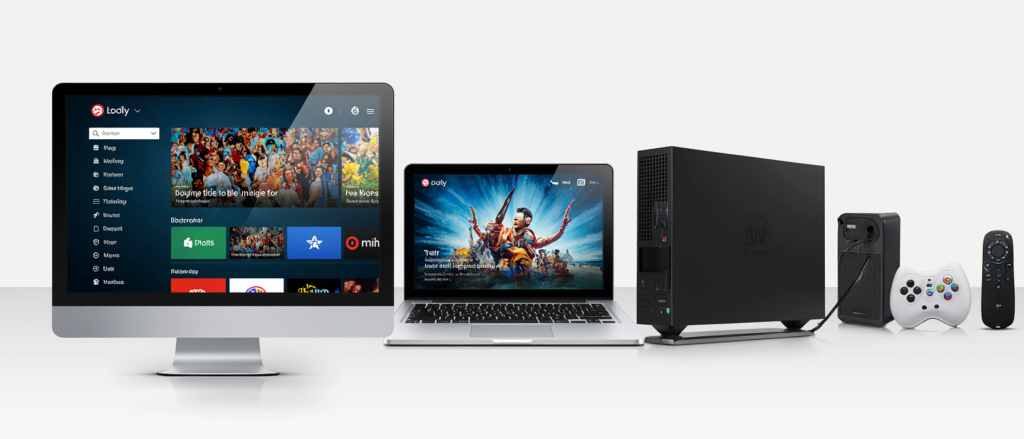
One of the strongest advantages of IPTV on Plex is its wide device compatibility. Plex supports Windows, macOS, Linux, Android, iOS, Smart TVs, Roku, Fire TV, and gaming consoles. This allows users to access IPTV channels from virtually any modern device without additional configuration changes. Each device synchronizes with the same Plex server, ensuring consistent playback and library organization.
According to Digital Trends, this cross-platform flexibility is one of the reasons Plex remains a leading media solution in 2026. Mobile users benefit from offline sync features, while TV users enjoy optimized interfaces designed for remote control navigation. This ecosystem makes IPTV on Plex more scalable than traditional IPTV apps that are often limited to single-device usage or restricted operating systems.
Performance Comparison Table
The following table compares IPTV on Plex with traditional IPTV apps based on performance, usability, and features:
| Feature | IPTV on Plex | Standard IPTV Apps |
|---|---|---|
| Interface | Unified media hub | Separate app UI |
| Device support | Multi-platform | Limited compatibility |
| DVR capability | Yes (advanced) | Rare or limited |
| Customization | High | Medium |
| Setup complexity | Moderate to High | Low |
| Stability | High (optimized) | Variable |
| Metadata support | Advanced | Basic |
This comparison shows that IPTV on Plex provides a more advanced and structured ecosystem. However, it requires more technical setup compared to simple IPTV applications, making it better suited for users who value control and performance optimization.
Optimization Tips for Smooth Streaming
To ensure optimal performance for IPTV on Plex, users should prioritize server optimization and network stability. Using wired Ethernet instead of Wi-Fi significantly reduces buffering and packet loss. Additionally, enabling hardware transcoding in Plex settings improves video processing efficiency, especially for high-resolution streams.
It is also recommended to regularly update IPTV playlists and remove broken channels. Middleware tools should be monitored to ensure proper EPG synchronization. Insights from PCWorld suggest that optimizing cache settings and reducing simultaneous streams can greatly improve playback quality. Finally, users should avoid overloaded servers, as Plex performance depends heavily on CPU and RAM availability during peak streaming sessions.
Common Issues and Troubleshooting
One of the most common issues in IPTV on Plex setups is channel buffering caused by unstable IPTV sources. This is often resolved by switching to higher-quality playlists or improving server bandwidth. Another frequent issue is missing EPG data, which usually occurs when XMLTV sources are incorrectly mapped.
Users may also experience channel duplication or loading errors due to misconfigured tuners in Xteve or similar tools. Restarting Plex Media Server often resolves synchronization problems. According to troubleshooting guides referenced by Lifewire, most issues stem from improper configuration rather than Plex itself. Maintaining updated software versions and verifying IPTV sources regularly ensures a stable and reliable streaming experience across all devices.
Advanced IPTV on Plex Optimization Strategies
Once IPTV on Plex is properly installed, the next step is optimizing performance for long-term stability and smooth playback. Advanced users typically focus on reducing transcoding load, improving network routing, and fine-tuning middleware settings like Xteve or Threadfin. Hardware acceleration inside Plex should always be enabled if supported by the device, as it significantly reduces CPU usage during HD and 4K streaming. Many performance breakdowns referenced by Tom’s Guide and TechRadar highlight that transcoding is the biggest bottleneck in IPTV setups.
Another important optimization method involves cleaning IPTV playlists regularly to remove dead or inactive channels. Users also benefit from limiting simultaneous streams per account, especially in multi-user environments. Adjusting buffer size settings and using SSD storage for Plex metadata can further improve responsiveness. These small technical adjustments collectively ensure IPTV on Plex runs like a premium streaming system rather than a basic IPTV player.
Security and Legal Considerations for IPTV on Plex
Security is a critical factor when configuring IPTV on Plex, especially because IPTV sources vary widely in quality and legitimacy. Users must ensure that IPTV playlists come from trusted providers to avoid exposure to malicious streams or unstable servers. Using a VPN is often recommended to protect privacy and encrypt traffic, especially when accessing external IPTV sources. Insights from CNET emphasize that network protection plays a major role in maintaining safe streaming environments.
Legally, IPTV usage depends on the content source and regional regulations. Plex itself is fully legal as a media platform, but users are responsible for ensuring that IPTV streams comply with copyright laws in their country. Experts referenced by PCWorld consistently stress that compliance is essential to avoid risks. Therefore, IPTV on Plex should always be configured with legitimate or licensed content sources to ensure safe and responsible usage.
Streaming Quality Factors and Performance Control
Streaming quality in IPTV on Plex depends on several interconnected factors, including internet speed, server performance, and stream encoding. A stable connection above 25 Mbps is required for HD content, while 4K streaming demands significantly higher bandwidth. However, speed alone is not enough; latency and packet loss also play major roles in playback stability. Users often underestimate the importance of router quality and local network optimization.
According to technical evaluations from Digital Trends and Android Authority, codec compatibility and bitrate management also influence streaming performance. Plex performs better when streams use efficient codecs like H.264 or H.265. Additionally, reducing background network usage and prioritizing Plex traffic through QoS settings can eliminate buffering. These combined adjustments ensure a consistent, high-quality IPTV experience even during peak network usage.
Real-World Use Cases of IPTV on Plex
IPTV on Plex is used in multiple real-world scenarios beyond basic home entertainment. In residential setups, families use Plex to combine personal media libraries with live TV channels, creating a unified entertainment system. In small offices, Plex is often used to stream news channels and informational content across multiple screens for staff awareness. Educational institutions also use similar configurations for broadcasting internal media content.
Another growing use case is multi-device streaming in smart homes, where users switch seamlessly between TVs, smartphones, and tablets. This flexibility is highlighted in reviews from TechRadar as one of Plex’s strongest advantages. Additionally, content creators use IPTV on Plex for monitoring live broadcasts while managing recorded media. This versatility demonstrates how Plex extends beyond traditional media servers into a full-scale digital distribution platform.
16. Future of IPTV on Plex in 2026 and Beyond
The future of IPTV on Plex is closely tied to advancements in streaming technology, AI-based content organization, and cloud integration. As internet infrastructure improves globally, IPTV systems are expected to become more stable and high-definition content will become the standard rather than the exception. Plex is also gradually evolving toward smarter metadata handling and automated content categorization.
Industry analysis from Tom’s Guide and CNET suggests that future media servers will rely heavily on AI-driven recommendations and adaptive streaming technologies. IPTV integration is expected to become more seamless, reducing the need for manual playlist configuration. Cloud-based Plex servers may also eliminate many hardware limitations, allowing users to stream IPTV content without relying on powerful local machines. This evolution positions IPTV on Plex as a long-term solution for modern digital entertainment ecosystems.
Conclusion
IPTV on Plex represents a powerful combination of live television streaming and advanced media organization. By integrating IPTV sources into Plex Media Server, users gain access to a centralized platform that supports live TV, personal libraries, and on-demand content in one interface. While the setup process requires technical understanding, the benefits in terms of customization, cross-device compatibility, and media control are significant. Performance depends heavily on proper configuration, optimized hardware, and stable IPTV sources.
With the right setup, IPTV on Plex can replace traditional cable systems and fragmented streaming apps. It offers a scalable solution suitable for both casual users and advanced enthusiasts. As streaming technology continues to evolve, Plex is expected to become even more efficient and intelligent, making IPTV integration smoother and more accessible across all devices.
Frequently Asked Questions (FAQ)
1. Is IPTV on Plex officially supported?
No, IPTV on Plex is not officially supported by Plex. It relies on third-party tools like Xteve or Threadfin to integrate IPTV streams into the Plex ecosystem.
2. Do I need a powerful PC for IPTV on Plex?
Not necessarily, but a stronger CPU and at least 8GB RAM are recommended for smooth streaming, especially if multiple users or HD/4K content are involved.
3. Why does IPTV buffer on Plex?
Buffering usually happens due to weak IPTV sources, low internet speed, or high CPU usage during transcoding. Optimizing network settings often resolves this issue.
4. Can I use IPTV on Plex on Smart TVs?
Yes, Plex supports Smart TVs, Roku, Fire TV, Android TV, and other devices, allowing IPTV streaming across multiple platforms.
5. Is IPTV on Plex legal?
Plex is legal, but IPTV legality depends on the content source. Users must ensure they are using licensed or authorized IPTV streams.
6. What is the best IPTV format for Plex?
M3U playlists combined with XMLTV EPG data are the most compatible formats for IPTV integration with Plex.
7. Can I record IPTV on Plex?
Yes, Plex supports DVR functionality if properly configured, allowing users to record live IPTV streams to local storage.
8. Does IPTV on Plex work without internet?
No, IPTV on Plex requires a stable internet connection since all content is streamed in real time from online sources.